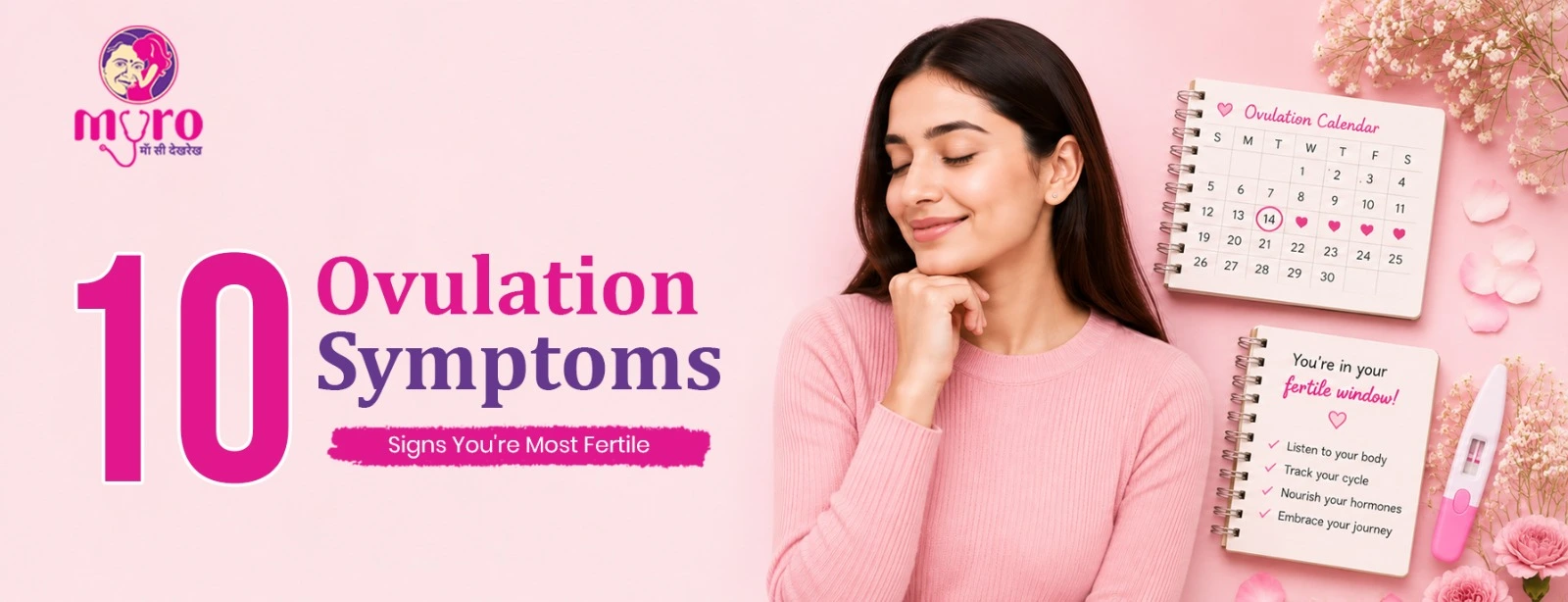
What’s actually going on in your body when people talk about “ovulation”? In the simplest terms, it’s the few days each month when an egg leaves the ovary and is ready to be fertilised, which makes it the one part of your cycle where pregnancy can actually happen. Most women don’t realise just how many small signs of ovulation their body gives off during this window, from changes in discharge to a slight shift in mood or energy.
Learning to notice these ovulation symptoms matters for two reasons: it helps if you’re trying to conceive, and it can be a problem early if something’s off. If your cycles are all over the place or things just don’t add up month after month, that’s worth a conversation with the best gynaecologist in Jaipur rather than another few months of guessing. This blog explains what to actually look out for, and when it’s time to stop waiting and get checked.
Ovulation Is the Most Fertile Phase of Your Menstrual Cycle
Ovulation is the only time in your entire cycle when you can get pregnant. Once you understand roughly when the ovulation cycle takes place and why, a lot of the mystery around fertility tends to disappear.
What Is Ovulation?
Ovulation happens when a mature egg is released from one of the ovaries and travels down the fallopian tube. This egg survives for roughly 12 to 24 hours, and it’s only during this short stretch that fertilisation can occur.
When Does Ovulation Usually Occur?
In a typical 28-day cycle, ovulation tends to occur around day 14. But this varies quite a bit from woman to woman. Plenty of women ovulate earlier or later than that, and a shorter or longer cycle will shift things accordingly, so day 14 is a starting point, not a rule.
Why Is Ovulation Important for Pregnancy?
Without ovulation, there’s no egg available for sperm to fertilise, so conception simply can’t happen. Knowing where your fertile window falls means you’re not leaving conception down to chance, and you can actually time things when the odds are working in your favour.
10 Ovulation Symptoms That Indicate You’re Most Fertile
Your body sends many signals during ovulation, even if you’ve never paid close attention before. Once you know what to look for, most of these ovulation symptoms are easy to spot. Here are some of the most common ones:
1. Clear, Stretchy Cervical Mucus
This is one of the most common ovulation symptoms patients ask about. Around ovulation, discharge often turns clear and slippery, a bit like raw egg white, and that texture is doing its job by helping sperm swim through more easily.
2. Mild Lower Abdominal Pain (Ovulation Pain)
Some women get a dull ache, others a quick sharp twinge on one side, low in the belly. It’s called mittelschmerz. It usually passes within a few hours, and on its own it’s nothing to worry about.
3. Slight Rise in Basal Body Temperature
After ovulation, progesterone rises and pushes your resting body temperature up by around 0.3 to 0.5°C. It’s a tiny shift you’d never feel day to day, but it shows up clearly if you track it with a proper thermometer over a few cycles.
4. Increased Sexual Desire
There’s a reason libido tends to pick up around this time, and it’s not just in your head. Hormonally, your body is nudging you towards exactly the right moment.
5. Breast Tenderness
Hormones fluctuate quite a bit around ovulation, and breast tissue is sensitive to that. A bit of soreness or fullness for a day or two is common and settles on its own.
6. Light Spotting
Oestrogen dips briefly right as the egg is released, and occasionally that shows up as a touch of spotting. It’s short, it’s light, and it’s easy to tell apart from an actual period once you know what to look for.
7. Increased Sense of Smell
Oestrogen peaks just before ovulation, and interestingly, some women notice smells more intensely around this time. It’s subtle, but real, and patients are often surprised to hear it’s linked to their cycle at all.
8. Bloating
Feeling a bit puffier than usual right before ovulation isn’t your imagination. Hormonal shifts cause some water retention, and it’s one of the more common signs of ovulation, usually easing within a day or so.
9. Soft and Open Cervix
Your cervix actually changes position and texture through the month, and around ovulation it becomes softer, sits a little higher, and opens slightly to help sperm along. Once ovulation passes, it goes back to how it was.
10. Positive Ovulation Test Kit Result
OPKs pick up the surge in luteinising hormone that triggers the egg’s release. A positive result usually means ovulation is coming within the next day or so.
| Ovulation Symptom | Why It Happens | Is It Normal? |
| Clear, stretchy mucus | Rising oestrogen thins cervical mucus | Yes |
| Mild pelvic pain | The follicle ruptures as the egg is released | Yes, if brief |
| Rise in basal temperature | Progesterone increases post-ovulation | Yes |
| Increased libido | Hormonal surge before ovulation | Yes |
| Breast tenderness | Oestrogen and progesterone fluctuating | Yes |
| Light spotting | Brief drop in oestrogen | Yes, if minimal |
| Heightened sense of smell | Oestrogen peak before ovulation | Yes |
| Bloating | Water retention from hormone shifts | Yes |
| Soft, open cervix | Prepares the body for sperm passage | Yes |
| Positive OPK result | LH surge ahead of egg release | Yes |
How Can You Confirm That You’re Ovulating?
Symptoms give you a good hunch. But if you are wondering how to know if you’re ovulating for certain, you’ll need to pair them with a tracking method. Here’s how to know if you’re ovulating without just guessing:
Track Your Menstrual Cycle
Jot down when your period starts, every month, for at least a few cycles. Patterns start to emerge pretty quickly, and that alone gives you a rough idea of when ovulation is likely to fall.
Use Ovulation Predictor Kits (OPKs)
These are the urine test strips that detect the LH surge before ovulation. They’re inexpensive, easy to use at home, and honestly one of the more reliable ways to narrow things down.
Monitor Basal Body Temperature
Take your temperature first thing every morning, before you even get out of bed, and log it. Do this consistently for ovulation tracking over a few cycles, and the post-ovulation rise becomes fairly obvious in hindsight.
Observe Cervical Mucus Changes
This takes a little practice, but paying attention to how your discharge changes through the month is free and surprisingly accurate once you get the hang of it. Most women can learn to read their own pattern within two or three cycles.
Fertility Ultrasound
When other methods aren’t giving clear enough answers, a transvaginal ultrasound can actually watch the follicle grow and confirm when the egg is released. It’s not needed for everyone, but it’s useful when there’s a specific concern to sort out.
What Is the Fertile Window and Why Does It Matter?
Your fertile window is the stretch of days when sex can actually lead to pregnancy, and it’s wider than most people think. Miss it, and you’re generally looking at waiting for the next cycle. Let’s understand it in more detail.
Understanding the 5-Day Fertile Window
Sperm can survive inside the reproductive tract for up to five days, so your fertile window actually starts about five days before ovulation and runs through the day itself. That’s why couples don’t need to time things down to the exact hour.
Best Time to Conceive
If you’re aiming for the highest odds, the two or three days right before ovulation, plus the day of ovulation, are your best shot. This is when timing genuinely makes the biggest difference.
Chances of Pregnancy During Ovulation
Ovulation and pregnancy go hand in hand, and the numbers back this up. Couples who have intercourse during the fertile window have noticeably better odds than those who leave it to random chance across the month.
| Cycle Day | Fertility Level |
| Day 1-7 | Low |
| Day 8-11 | Increasing |
| Day 12-16 | Highest |
| Day 17+ | Low |
What Can Affect Ovulation?
Ovulation is sensitive to more than most people expect, from underlying health conditions to everyday habits. Here are the usual culprits behind irregular ovulation.
PCOS
PCOS throws off the hormonal balance needed for an egg to mature properly. It often means ovulation happens erratically or not at all. Our PCOS guide goes into this in more depth.
Stress
Chronic stress affects the hypothalamus, which is the part of your brain that keeps reproductive hormones in check. Even a particularly rough month can delay ovulation, and sometimes skip it altogether.
Thyroid Disorders
Whether your thyroid is underactive or overactive, either can lead to irregular ovulation. If your cycles have gone off track for no obvious reason, a simple thyroid test is often a good place to start.
Being Underweight or Overweight
Body fat plays a bigger role in hormone production than most people assume, so being significantly under or over a healthy weight can throw ovulation off. Getting to a healthier, stable weight often helps things regulate on their own.
Hormonal Imbalances
Oestrogen, progesterone, prolactin and LH going out of balance can impact ovulation. Blood tests usually pin down exactly which hormone is the issue, which makes treatment far more targeted.
When Should You Visit a Gynaecologist for Ovulation Problems?
Some signs are worth acting on straight away rather than waiting it out. If any of these sound familiar, it’s time to talk to the doctor. Here are the ones to look out for:
Irregular Menstrual Cycles
If your cycle length keeps swinging month to month with no real pattern, that’s often a sign something’s affecting ovulation underneath. A proper evaluation can usually explain what’s going on.
Difficulty Conceiving
Been trying for over a year, or six months if you’re past 35, with no luck? Ovulation issues are one of the most common, and most treatable, reasons behind delayed conception.
No Signs of Ovulation
If you genuinely can’t recall noticing any typical ovulation symptoms across several cycles, don’t just brush it off. A gynaecologist can run the right tests to check whether ovulation is happening at all.
Severe Ovulation Pain
A bit of mild ovulation discomfort is normal, but pain that’s intense, drags on, or comes with fever or unusual bleeding is a different story. That deserves a proper look.
Suspected PCOS or Hormonal Disorders
Acne, unexpected hair growth, sudden weight changes, alongside irregular cycles, these together often point towards PCOS or another hormonal issue. Catching it early makes a real difference in how manageable it is.
Tips to Support Healthy Ovulation Naturally
None of this requires a complete lifestyle overhaul. Small, consistent habits genuinely support healthy ovulation more than any quick fix ever will. Here are a few tips to follow:
Eat a Nutrient-Rich Diet
Consume whole grains, healthy fats, lean protein and plenty of vegetables. This combination supports hormonal balance far better than any single “superfood.” Cutting back on processed food and added sugar helps too.
Maintain a Healthy Weight
Both ends of the scale, too low or too high, can disrupt the hormones ovulation depends on. Working towards a stable, healthy weight tends to bring cycles back into rhythm over time.
Exercise in Moderation
Regular movement is good for hormonal health, but overdoing high-intensity training can actually work against you and suppress ovulation. Balance really does matter more than intensity here.
Manage Stress
Since stress hormones interfere directly with the signals that trigger ovulation, something as simple as yoga, a short walk, or even switching off your phone for an hour can help. Small daily habits add up more than people expect.
Checklist for Healthy Ovulation:
- Balanced diet
- Regular exercise
- Adequate hydration
- Stress management
- Regular health check-ups
Common Myths About Ovulation
A fair bit of the ovulation advice floating around isn’t quite right, and it causes more confusion than it solves. We have debunked some of the most common myths below:
Myth: Every Woman Ovulates on Day 14
Only true if you happen to have a textbook-perfect 28-day cycle, and honestly, few women do. Ovulation can land anywhere depending on your individual cycle length.
Myth: You Can Feel Ovulation Every Month
Some months you’ll notice nothing at all, and that doesn’t mean anything’s wrong. Plenty of perfectly healthy cycles pass with barely a hint of a symptom.
Myth: Regular Periods Always Mean Regular Ovulation
Getting a period doesn’t automatically confirm ovulation happened that month. Anovulatory cycles can still produce bleeding that looks exactly like a normal period.
Myth: Ovulation Tests Guarantee Pregnancy
A positive test only tells you the LH surge has happened, nothing more. Egg quality, sperm health, and plenty of other factors still come into play.
Can You Get Pregnant Without Ovulation?
No, and this is one of the more important things to understand. Without ovulation, there’s no egg to fertilise, which is exactly why ovulation and pregnancy are so closely tied together.
Fertilisation needs a mature egg to meet sperm, and that egg only exists once it’s released during ovulation. Skip that step, and conception simply isn’t possible, regardless of anything else lining up.
Conditions That Prevent Ovulation
PCOS, thyroid issues, premature ovarian insufficiency, and significant hormonal imbalances can all stop ovulation from happening regularly. Extreme stress or a very low body weight can pause it temporarily too.
Treatment Options for Anovulation
Treatment comes down to what’s causing the problem in the first place. For some women, it’s as simple as tweaking diet or exercise. For others, it means medication like letrozole or clomiphene to help trigger ovulation. If things still aren’t clicking, it might be worth looking into fertility treatment as a next step. Check out our Fertility Treatment / Pregnancy Planning page for that.
Why Choose Myro Clinic?
If you’re looking for the best gynaecologist in Jaipur for anything to do with ovulation or fertility, this is where expertise and genuine care actually meet. Patients visit our clinic for the following reasons:
- Gynaecologists and fertility experts who’ve genuinely seen it all when it comes to ovulation and reproductive health
- Fertility assessments that actually look at your cycle, not a one-size-fits-all checklist
- Hormonal testing and ultrasound diagnostics that get you real answers, not guesswork
- Pregnancy planning support built around how your own cycle behaves
- PCOS and reproductive health care that thinks long-term, not just quick fixes
- Care that feels compassionate from the very first visit, not just clinical
FAQs
What are the first signs of ovulation?
The earliest signs are usually a change in cervical mucus, a bit of mild pelvic discomfort, and a noticeable uptick in libido. Some women also get light spotting or breast tenderness around the same time.
How many days do ovulation symptoms last?
Individual symptoms usually last anywhere from a few hours to a couple of days. The fertile window itself, though, stretches over roughly five to six days.
Can you ovulate without noticeable symptoms?
Yes, plenty of women ovulate every month without feeling a thing. That’s not necessarily a red flag. Tracking methods can help confirm it either way.
What is the best time to get pregnant during ovulation?
Your best odds are the two to three days leading up to ovulation, plus the day itself. That’s when egg and sperm are most likely to actually meet.
Can stress delay ovulation?
Yes, it can. A stressful few weeks can genuinely push ovulation back, or in some cases stop it altogether that cycle.
Does PCOS affect ovulation?
Yes, it’s actually one of the most common causes we see. It gets in the way of the hormonal signals an egg needs to mature and release.
When should I see a gynaecologist for ovulation problems?
If your cycles are all over the place, you’ve been trying to conceive with no luck, or ovulation pain feels like more than a twinge, it’s worth getting checked. Sooner is always better when it comes to figuring out what’s going on.
Who is the Best Gynaecologist in Jaipur for ovulation and fertility care?
Myro Clinic’s gynaecologists specialise in fertility, ovulation disorders, and reproductive health in general. They’re known for being genuinely patient-first, which is a big part of why so many women in Jaipur trust them.