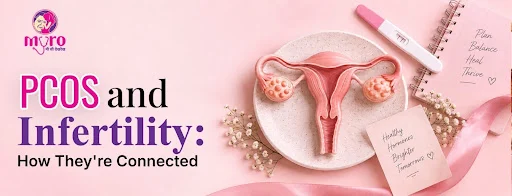
Does PCOS always mean you cannot get pregnant? No, it does not. Polycystic Ovary Syndrome makes conception harder for many women. But it usually does not eliminate the chances of conception. PCOS and infertility are closely linked because the condition disrupts ovulation, the process a woman’s body relies on to release an egg each month.
Irregular ovulation can affect chances of pregnancy. Still, the relationship between PCOS and infertility is not definite. Women with PCOS have the ability to conceive with proper diagnosis and treatment measures. Understanding how this condition affects reproductive health is the first step toward addressing it with clarity instead of anxiety.
What Is PCOS, Briefly?
PCOS is a hormonal condition marked by irregular ovulation, raised androgen levels and small cysts along the ovaries. For a fuller picture, the 10 early signs of PCOS cover the symptoms that are worth reading.
Confusion between related terms is common too, and PCOS vs PCOD breaks down the difference clearly.
How Does PCOS Cause Infertility?
There is no single cause behind PCOS-related infertility. It builds from several overlapping hormonal shifts. The causes of female infertility place PCOS within that wider picture. Each contributing factor is worth examining on its own.
Irregular or Absent Ovulation
Ovulation is the release of a mature egg, and without it, conception cannot occur naturally. PCOS disrupts the hormonal signals that ovarian follicles rely on to mature, so eggs often stay underdeveloped or are never released at all. A woman might skip ovulation for two or three months at a stretch or sometimes longer.
Fewer ovulations across a year mean fewer chances to conceive. This is why cycle tracking matters more than it might for someone without the condition. Ovulation symptoms outline what a functioning cycle should look like in comparison.
Hormonal Imbalance and Egg Quality
The levels of androgens usually remain high in most cases of PCOS. When androgen levels stay elevated across cycles, follicle development gets interrupted before an egg can mature properly.
Egg quality tends to decline as a result, though not identically in every woman. Some experience this disruption in nearly every cycle, while others notice it occasionally. This explains why fertility struggles in PCOS look different from one patient to the next.
Insulin Resistance and Its Role
Insulin resistance shows up in a large share of PCOS cases, and it does not stay isolated from the hormonal picture. When cells stop responding well to insulin, the pancreas compensates by producing more of it. That excess insulin pushes the ovaries to make even more androgens than they already do.
Insulin resistance worsens the hormonal imbalance, and the imbalance further worsens ovulation. Improving insulin resistance is often where fertility treatment actually begins, well before any medication targeting ovulation directly is introduced.
Higher Miscarriage Risk in PCOS
Early miscarriage is more common in women with PCOS, mainly because of the hormonal and metabolic changes linked to the condition.
This is one reason doctors recommend closer monitoring once pregnancy is confirmed, including earlier ultrasounds and more frequent hormone checks. Catching complications early gives far more time to manage them.
Signs Your PCOS May Be Affecting Fertility
Fertility complications do not follow every PCOS diagnosis. Still, certain patterns are worth flagging to a doctor sooner rather than later, especially when it comes to PCOS infertility symptoms.
- Cycles longer than 35 days or missed periods.
- Trying to conceive for 6+ months without success.
- Excess facial or body hair alongside irregular periods.
- Unexplained weight gain paired with cycle irregularity.
If two or more of these show up together, it is worth scheduling an appointment rather than waiting to see if the pattern resolves by itself.
Can Women with PCOS Get Pregnant?
Yes, many women with PCOS do get pregnant. PCOS pregnancy chances rise once the underlying cause is identified and addressed. Some cases respond well to lifestyle changes alone. Others need medical support along with it. Dr Satyamvada Pandey notes that the right starting point usually comes down to how disrupted ovulation already is and how long a couple has already been trying without success.
| Parameter | Lifestyle-First Approach | Medical Treatment |
| Best suited for | Women with PCOS looking to improve overall health and support ovulation. | Women with PCOS-related ovulation problems who are trying to conceive. |
| Typical duration | Long-term management. | Usually given in treatment cycles, based on individual response. |
| What it involves | Healthy eating, regular exercise, appropriate weight management and good sleep. | Ovulation-induction medicines, mainly letrozole, to stimulate ovulation. |
| Next step if unsuccessful | Move to medical fertility treatment if pregnancy does not occur. | Other fertility treatments, such as gonadotrophins or IVF, may be considered. |
How Is PCOS-Related Infertility Diagnosed?
Diagnosis starts with a detailed history, followed by tests that confirm both hormonal status and whether ovulation is happening at all. A gynaecologist usually draws on several of these together before settling on a treatment path.
Tests and Scans Typically Used
Blood tests check androgen, LH, FSH and insulin levels, giving a clearer read on where the imbalance is occurring. A pelvic ultrasound looks for the follicle pattern typical of PCOS and checks the general structure of the ovaries and uterus.
Ovulation gets tracked through basal temperature charts or hormone kits. Glucose and insulin tests can also identify metabolic problems that may affect hormone levels.
Treatment Options for PCOS-Related Infertility
The PCOS infertility treatment builds in stages. Conservative steps come first, and more advanced options only enter the picture if those steps fall short.
Doctor Insight: In practice, PCOS-related infertility is one of the more treatable forms we manage. With a structured plan and time to work through it properly, most women with PCOS may conceive. Treatingthe underlying hormonal issues usually helps more than rushing into procedures. Patience with the right guidance usually pays off.
Lifestyle and Weight Management
Even a modest drop in body weight can bring ovulation back for many women, particularly when insulin resistance is part of the picture. Better nutrition, consistent activity and improved sleep all contribute to hormonal regulation over the following months.
Medical Treatment for Ovulation Induction
When only lifestyle changes are not enough, a gynaecologist may prescribe medication to encourage follicle growth and ovulation. Progress gets tracked through ultrasound and bloodwork so the response can be adjusted as needed.
When Assisted Reproduction (IUI/IVF) May Be Needed
If ovulation induction does not lead to pregnancy after a fair trial, assisted reproduction becomes the next conversation. IUI or IVF depends on a full evaluation of both partners, not just the PCOS diagnosis alone.
When Should You Consult a Gynaecologist?
Cycles stretching past six months without conception, alongside other PCOS ovulation problems, are reason enough to seek proper infertility care rather than waiting longer.
Getting ahead of the timeline gives more options later. Book a consultation to know what is happening in your specific case.
Author
Dr Satyamvada Pandey holds an MBBS, DGO and DNB, with more than 15 years spent evaluating PCOS and infertility cases alongside endoscopic gynaecology work. She practices in Mansarovar, Jaipur and focuses on building fertility plans around each patient’s health requirements.
Conclusion
PCOS and infertility connect through disrupted ovulation, hormonal imbalance and insulin resistance working together, yet the condition responds well to the right treatment. Most women with PCOS conceive eventually, whether through lifestyle changes, medication or assisted reproduction when it becomes necessary.
Catching the warning signs early and being evaluated sooner usually increases the chances of getting pregnant with PCOS. Book a consultation with Dr Satyamvada Pandey at Myro Clinic to get a personalised fertility plan for your PCOS.
FAQs
Can PCOS be cured to restore fertility?
PCOS is a chronic hormonal condition, so it cannot be cured outright. That said, its underlying symptoms respond well to targeted management. Once insulin resistance improves and androgen levels come down, ovulation tends to become more regular, and fertility improves substantially as a direct result.
How long does it usually take to get pregnant with PCOS?
There is no fixed timeline because outcomes depend on several individual factors working together. Age, frequency of ovulation and time taken to begin treatment after diagnosis will influence the rate of development.
Does weight loss really improve fertility in PCOS?
In many cases, yes. In fact, sometimes even a small amount of weight loss is sufficient for restoring ovulation. This effect is most pronounced in women where insulin resistance is a significant contributor to their hormonal imbalance.
Is IVF necessary for every woman with PCOS?
IVF is certainly not a must. It is for those cases where ovulation induction and changes in lifestyle do not lead to pregnancy even after a certain period of time.
Can PCOS cause infertility even with fairly regular periods?
Absolutely, it can. A hormonal imbalance can influence egg quality despite the presence of a regular menstrual cycle. So, a fertility assessment is important whether the menstrual cycle is healthy or not.
Does PCOS increase risks after you do conceive?
It can. Women with PCOS face somewhat higher chances of early miscarriage and gestational diabetes during pregnancy. This is why prenatal monitoring is generally advised right from the beginning.